Pillows · Sleep science
How to Choose a Hybrid Pillow for Balanced Support
A pillow is a small detail with an outsized presence in the nightly ritual. Hybrid designs bring together foam and softer companion fillings, aiming to unite structure with a more yielding feel. The right choice depends less on a fashionable label than on how the pillow’s height, materials and construction suit your sleep habits.
Published 14 October 2026
Somewhere between the crisp formality of a firm foam pillow and the cloud-like ease of a traditional fibre fill sits the hybrid pillow. Its appeal is the balance: enough structure to help the pillow hold its shape, paired with a softer, more adaptable surface. In practice, “hybrid” describes a family of constructions rather than one precise recipe. A design might use foam around a fibre core, combine several foam layers, or pair a resilient core with a more forgiving outer fill.
That distinction matters. A pillow’s name can suggest a certain experience, but the material arrangement, loft and feel are what you will notice when your head meets the surface. For some sleepers, a hybrid pillow offers a composed, supportive feel without the dense sensation associated with a solid foam block. For others, the combination may feel too tall, too soft or simply unlike the pillow they prefer.
Choosing well begins with a few unglamorous but useful questions: Do you sleep mostly on your side, back or front? How much space do you need between your shoulder and head? Do you like a pillow that can be reshaped, or one that returns to form on its own? And, crucially, how much maintenance are you willing to take on? Answer these and the choice becomes less about marketing language and more about everyday comfort.
What makes a pillow hybrid?
A hybrid pillow combines two or more types of filling or construction. Foam may provide the supporting structure, while down-alternative fibre adds softness and a more familiar, cushioned sensation. In another design, different foam layers create a varied feel from surface to core. The precise blend influences how the pillow responds to pressure, how quickly it changes shape and how much it retains its original loft overnight.
Compared with a pillow made entirely from loose fibre, foam-and-fibre construction may feel more stable and require less frequent fluffing. The foam layers can help the pillow keep its form, while the fibre component softens the overall impression. Yet no hybrid is automatically supportive or comfortable. Foam density, layer thickness, fill quantity and pillow dimensions all play a part.
It is helpful to think of a hybrid pillow as a design approach, not a guarantee. The word does not tell you whether a pillow is firm or plush, low or lofty, cool or warm. Those qualities depend on the details. Read the materials description, look for information about the construction, and treat phrases such as “all-night support” as a starting point for questions rather than a promise that one pillow suits every sleeper.
Begin with your sleep position
Your usual sleep position gives you a useful first clue about pillow height, often called loft. The goal is not to force the body into a rigid ideal, but to find a pillow that feels comfortable and helps keep the head and neck from tipping sharply in either direction. Mattress firmness, shoulder width and personal preference influence the result, so position is a guide rather than a fixed rule.
Side sleepers
When lying on your side, the distance between the mattress and your head is shaped in part by shoulder width and how much the shoulder sinks into the bed. A pillow with a little more height may feel appropriate for someone who needs to bridge that gap. Side sleepers who prefer a fuller pillow might appreciate a hybrid design with a more substantial profile, but loft alone is not enough: if the pillow is too high, it can feel as though the head is pushed upwards; if it is too low, the head may dip towards the mattress.
Notice whether the pillow holds its shape after you settle into position. A supportive hybrid should feel stable without being unyielding. If you regularly fold or bunch a pillow to create enough height, that is useful information: you may prefer a taller profile, an adjustable fill, or a different construction.
Back sleepers
Back sleepers often look for a middle ground: enough loft to feel supported, without so much height that the chin is pushed towards the chest. A pillow with a responsive foam component may offer a steadier base than loose fibre alone, while a softer outer layer can make the surface feel less rigid. The best measure is your own comfort as you lie naturally, rather than a number on a label.
Front sleepers
Front sleepers commonly prefer a lower, softer pillow, because a tall profile can feel awkward when the head is turned to one side. A lofty hybrid design may therefore be a poor match unless it compresses easily and settles low enough. If you sleep on your front for part of the night, consider how the pillow behaves under pressure as well as how tall it appears when untouched.
Combination sleepers
People who change position through the night may want a pillow that adapts without demanding constant rearrangement. A hybrid construction can be appealing if its materials recover their shape and remain comfortable across different positions. Still, a pillow that is perfect on your side might feel excessive on your back. A moderate loft and a responsive, not overly rigid feel can be a reasonable place to start.
Loft, firmness and support are not the same thing
These terms are often used interchangeably, but they describe different qualities. Loft is the pillow’s height. Firmness is how resistant it feels when compressed. Support describes how effectively it maintains a comfortable position for your head and neck. A high-loft pillow can be soft; a low pillow can still feel firm. Understanding the difference helps you compare options more precisely.
For instance, a pillow might look tall on the bed yet compress substantially once you lie down. Another might have a more modest profile but feel dense and steady. Hybrid pillows can be particularly varied because layers may behave differently: a plush outer surface can sit above a more structured foam centre. If a product description gives only the overall height, consider whether it also explains the feel or filling arrangement.
When testing a pillow in person, allow it to settle under the weight of your head rather than judging it with a quick hand press. At home, pay attention to whether you keep adjusting it, whether you wake with it bunched or flattened, and whether its height still feels comfortable in your usual position. These small observations can tell you more than a broad claim about “universal” support.
Understand the filling and layer arrangement
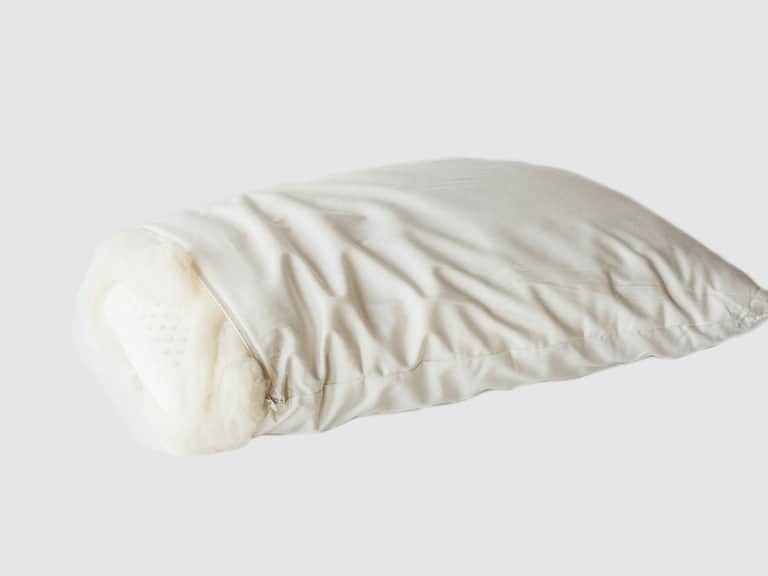
In a foam-and-fibre pillow, the foam may form outer layers or provide structure around a fibre core. If foam is layered around the centre, it can help the pillow retain a consistent outline, while the fibre core contributes a softer, more forgiving feel. In a different configuration, the core may carry more of the support and the surface may add a gentler first impression. Ask what each component does rather than assuming that every hybrid follows the same blueprint.
Some hybrid pillows use a removable cover, while others may offer adjustable filling. These are different features. A removable cover makes it easier to clean the fabric, but it does not necessarily mean the pillow’s core can be adjusted or washed. An adjustable pillow gives you the option to change the amount of filling, which can help fine-tune loft; however, the process may be messy and the pillow may need periodic attention to maintain its preferred shape.
As one example of the category, the Hybrid Pillow combines foam layers with a down-alternative fibre core and has a removable cover. That combination illustrates the central idea of a hybrid: a more structured outline paired with a softer, adaptable component. Whether those details suit you depends on the pillow’s feel and height in your preferred sleeping position, not simply on the fact that it is labelled hybrid.
Consider temperature and the feel of the cover
Temperature is personal, and the materials in a pillow can affect how warm or cool it feels. Foam and fibre constructions differ, as do covers, room conditions and the bedding around them. A breathable-feeling cover may be pleasant against the skin, but no single material can guarantee a cool night for every person. If you tend to feel warm, check whether the product description explains the cover and construction rather than relying on vague cooling language.
Fabric texture also contributes to the first impression. A soft knit cover may feel cosy and flexible, while a smooth woven cover may have a more tailored hand. Because many pillows are used beneath a pillowcase, the cover’s practical value may be as important as its feel: can it be removed, and what does the care guidance allow? A pillowcase remains the everyday layer against the face, but a washable outer cover can make routine upkeep more manageable.
Care is part of the decision
A pillow’s filling determines what care is safe. Removable covers are often easier to launder than a complete pillow, but follow the maker’s instructions before washing or drying any component. Foam cores are generally not treated in the same way as washable fabric covers; getting a core too wet or using high heat may damage its shape or materials. If the care label recommends spot cleaning, that instruction should take precedence over a general household routine.
For a pillow with a removable cover, regular laundering according to its care label can help keep the surface fresh. Use a protective pillowcase and replace it frequently. Between washes, airing the pillow in a dry, well-ventilated room may help it feel refreshed. Avoid prolonged exposure to direct sunlight unless the manufacturer says it is suitable, and do not assume that a removable cover means every part of the pillow can go into a washing machine.
Consider your habits honestly. If you want to wash the entire pillow often, a construction with a non-washable core may not fit your routine. If you prefer a pillow that needs little rearranging, a foam-supported hybrid may appeal more than loose fill that requires regular fluffing. Ease of care is not a glamorous specification, but it can determine whether a pillow remains a pleasure to use.
A simple way to compare hybrid pillows
Rather than comparing a long list of abstract claims, make a short checklist and use it for each option. Keep your usual sleeping position in mind, then compare the points that affect your daily experience:
- Construction: Is the pillow made with foam layers, a foam core, fibre fill, or a combination?
- Loft: Does the height suit your position and the way the pillow compresses under your head?
- Feel: Is the surface soft, resilient, firm, or somewhere between those sensations?
- Adjustability: Can you add or remove filling, or is the shape fixed?
- Cover: Is it removable, and are its washing instructions clear?
- Care: Can the core be cleaned, or does it require spot care only?
- Dimensions: Will it fit your pillowcase and sit comfortably on your bed?
Try not to let a single feature dominate the decision. A washable cover cannot compensate for an uncomfortable loft, just as a carefully described foam construction cannot guarantee that you will enjoy the feel. Prioritise the two or three qualities that matter most to you, then check that the remaining details fit your needs.
Common misconceptions about hybrid pillows
“Hybrid” means the same thing every time
It does not. The term indicates a combination of materials or layers, but the balance can vary widely. Two pillows described as hybrid may feel quite different because their foam, fibre, height and construction are not identical. Read the specifications rather than choosing by category name alone.
More layers always mean more support
Layer count does not tell the whole story. The thickness and character of each layer, along with the total loft, influence how the pillow feels. A multi-layer design may create a particular surface sensation, but the extra components do not automatically make it more suitable for your body or sleeping position.
A firmer pillow is always the more supportive choice
Firmness and support are related but not interchangeable. A pillow can feel firm and still sit at the wrong height for you. Conversely, a softer pillow may feel comfortable while offering enough structure for your preferred position. Judge the whole experience: height, compression, stability and ease of settling into sleep.
One pillow works for every sleeper
Sleep position, body shape, mattress feel and personal preference vary. A pillow that feels balanced to one person may seem too lofty or too soft to another. “All-position” language may describe a broad intention, but it cannot replace your own assessment of comfort.
How to make a thoughtful final choice
Start with the position in which you spend most of the night, but allow for the fact that people naturally move. Identify whether you prefer a low, medium or full pillow, then look for a construction that matches that preference. If you are undecided, compare the pillow’s stated loft and filling details, and look for a clear returns or trial policy before committing. Policies vary, so check the terms rather than assuming a trial is included.
When a pillow arrives, give yourself time to notice how it feels across several nights, following any guidance about unpacking or allowing the materials to settle. Keep track of whether you wake up needing to reshape it, whether the height remains comfortable as you change position, and whether the cover is practical to maintain. A single first impression can be misleading; a consistent pattern is more informative.
There is also no need to change everything in the bedroom at once. Your mattress, topper and pillow interact to shape the way you lie, so make one adjustment at a time when possible. If you change both mattress and pillow simultaneously, it may be harder to identify which change has improved or disrupted your comfort. Small, considered choices are often more useful than an ambitious overhaul.
The quiet art of balanced support
The best hybrid pillow is not necessarily the most elaborate or the most expensive. It is the one whose loft, feel and care requirements make sense for your sleep habits. Foam can lend a pillow structure; fibre can soften that structure and make the surface feel more yielding. Their partnership can be appealing, but the proportions and arrangement are what define the experience.
Think of pillow shopping as an exercise in personal editing. Remove the claims that do not answer your practical questions. Keep the details that do: what the pillow is made from, how tall it is, whether it can be adjusted, and how it should be cared for. With those considerations in view, choosing a hybrid pillow becomes less mysterious—and more likely to result in a comfortable, well-considered addition to your bed.