Sleep, design & everyday comfort
Adjustable Mattress Bases: A Guide to Features, Fit, and Everyday Use
A bed that changes shape can make room for reading, unwinding and finding a more comfortable sleeping position. But the appeal of an adjustable base is not only in its movement: mattress compatibility, bedroom dimensions, controls and daily habits all determine whether it feels like a considered upgrade or an elaborate piece of furniture.
Published 16 November 2026
A different way to think about the bed
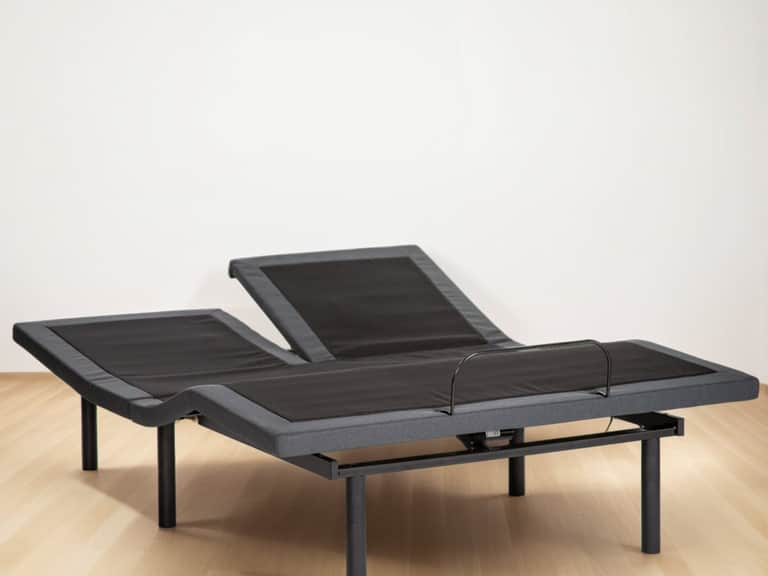
For generations, the bed has been treated as a fixed landscape: a level mattress, a familiar pillow arrangement and perhaps a stack of cushions recruited for an evening with a book. An adjustable mattress base makes that landscape more flexible. By lifting the head, the feet or both, it allows the sleeping surface to shift into different positions for different moments of the day.
That simple change can influence how a bed is used. A raised head section may make reading or watching a screen more comfortable than sitting upright against a headboard. A foot lift can offer a different resting posture. Returning the platform to flat creates the conventional sleep surface whenever it is wanted. Some bases also add features such as massage settings, remote presets, under-bed lighting or USB charging.
Yet more movement does not automatically mean more comfort. An adjustable base is a system: the foundation, mattress, frame, room layout and the sleeper’s preferences all have to work together. The most satisfying choice is therefore not necessarily the one with the longest feature list. It is the one whose positioning options and practical details fit the way the bed will actually be used.
What an adjustable mattress base does
An adjustable base is a powered foundation with movable sections, most commonly at the head and foot. Motors raise or lower those sections in response to a wired or wireless control. Depending on its design, a base may offer independent head and foot movement, preset positions, a programmable favourite setting, or additional functions such as massage.
It is useful to distinguish the base from the mattress. The base changes the angle of the sleeping surface; the mattress must flex along with it. A conventional rigid foundation and an adjustable base are not interchangeable in function, even if both sit beneath a mattress. The adjustable model requires suitable support, clearances and a compatible mattress construction.
Positioning is a matter of personal comfort rather than a guaranteed health outcome. Some people enjoy a slight incline while reading, for example, while others prefer a flat surface. An adjustable base should not be treated as a substitute for medical advice or as a promise to resolve pain, snoring or another health concern. If a particular position is being considered for a medical reason, a qualified clinician can offer guidance tailored to the individual.
Features worth considering
Independent head and foot positioning
The central feature is the ability to move sections of the base. Head adjustment is often the first function people notice because it transforms the bed into a place to sit back and read, browse or watch television. Foot articulation adds another dimension, allowing the lower part of the mattress to rise as well. Independent controls let the user adjust one end without necessarily changing the other.
Consider how fine the adjustment feels and whether the available range is useful for your routine. A few preferred positions may be enough; a wide range is not valuable simply because it exists. If possible, test the movement with the mattress in place. The feel of a base in a showroom, without the same bedding or setup as home, may not fully represent everyday use.
Remote controls and presets
A remote should make adjustment straightforward, especially when used in low light. Look for clearly marked buttons, intuitive controls and a way to return the base to flat. Preset positions can make repeated adjustments quicker, while a memory function can save a personally preferred arrangement. These conveniences are most useful when they are easy to understand and easy to reach.
For a shared bed, consider where the remote will live and whether its buttons are simple to use without disturbing the other sleeper. If the base has a child-lock function, read the manufacturer’s instructions and consider whether it is relevant to your household. Keep controls away from small children and ensure cords, if any, are managed safely.
Massage, lighting and charging
Some adjustable beds include massage functions, often with selectable intensity or timing. This is an optional comfort feature, not a therapeutic guarantee. Check how it operates, whether it has a timer and whether the sound or sensation suits your preferences. A feature that is pleasant for a few minutes may not be something you use nightly.
Under-bed lighting can provide a low-level route through the room without switching on brighter overhead lights. USB ports can keep devices close by, although charging needs, port placement and cable reach are worth checking in advance. Think about the details as part of the room’s rhythm: a helpful feature should make the routine feel easier, not add another control to manage.
Height, legs and frame compatibility
Adjustable bases may offer legs in different heights or configurations. This can affect how high the mattress sits, how easy it is to get in and out of bed, and how the base looks in the room. If you plan to place the base inside an existing platform or pedestal frame, confirm that the arrangement is approved by the manufacturer. Not every decorative bed frame is designed to accommodate a moving foundation.
Check whether legs can be adjusted, removed or stacked, and how those choices affect stability and clearance. Do not assume that a base will fit because its nominal size matches the mattress: its external dimensions, mechanism and intended support surface also matter.
Mattress compatibility: the essential check
Before choosing an adjustable bed base, verify that the mattress is approved for use with an articulating foundation. The mattress has to bend as the platform changes angle without compromising its construction or support. Compatibility varies by model and material, so the manufacturer’s guidance for the exact mattress is more reliable than broad assumptions about a whole category.
Foam and latex mattresses are often considered for adjustable setups because many models can flex, but construction, thickness and manufacturer specifications still matter. Innerspring and hybrid designs vary: some may be suitable, while others may not be intended to articulate. A mattress warranty can also set out foundation requirements. Check those terms before purchase, and ask the mattress maker directly if the documentation is unclear.
Also consider mattress weight, flexibility and thickness. A mattress that is difficult to move may make installation more demanding, while a very thick or unusually constructed model may behave differently when raised. Bedding can affect movement, too. Fitted sheets need enough depth and stretch to remain secure without pulling as the bed changes position. Keep the arrangement simple at first, then check that sheets and blankets stay in place through the positions you use most.
A practical question to ask is: does the entire sleep system work together? That includes the mattress, base, any mattress protector or topper, fitted sheet and existing frame. Confirming each component is more dependable than relying on a single product description to answer every compatibility question.
Choosing the right size—and making space for it
Start with the mattress size you want to use, then compare the base’s stated dimensions with the space available in the bedroom. A queen adjustable base, for instance, must fit not only the mattress but also the route into the room, its intended frame and any clearance needed around moving parts. Measure the bedroom, doorways, hallway turns and stairs before delivery. This is particularly important for a base that arrives assembled or in large sections.
Sketching the room can reveal practical issues that are easy to overlook. Leave enough room to get around the bed, open nearby drawers and reach bedside tables. Check how the raised mattress will relate to a headboard, wall, windowsill or shelves. Bedding and pillows can shift as the platform moves, so allow for ordinary use rather than measuring only the flat footprint.
Consider the power supply early. Identify the nearest outlet and how the power cord will reach it without crossing a walkway or becoming trapped beneath furniture. Follow the manufacturer’s instructions for cable routing and keep cords clear of the base’s moving sections. If the bed will sit in the middle of a room, think about how a visible cable can be managed safely and neatly.
Noise and movement are also part of the room’s atmosphere. Motors make some sound as they operate, and the base may shift slightly during adjustment. If the bedroom shares a wall or the bed is used by two people with different schedules, ask about the operating sound and test the base if possible. A split configuration may offer more individual control, but its dimensions and mattress arrangement need careful checking.
Shared sleeping: individual comfort, shared space
When two people share a bed, comfort preferences may not align. One may like a raised head position for reading; the other may want to remain flat. A split adjustable arrangement can allow each side to move independently, depending on the configuration. The trade-off is that the setup may require two mattress sections and can create a visible or tactile division between sides.
Before choosing a split design, confirm exactly which sections move independently and how the mattresses are sized. A split head configuration, for example, may differ from a fully split arrangement. Check whether each sleeper can operate their side without affecting the other, how the remote controls are assigned, and whether the chosen bedding suits the configuration.
Shared use also makes the location of controls, lighting and charging more important. Agree on a place for remotes, keep cables from crossing the space between sleepers, and consider whether movement at night might be disruptive. The aim is not to optimise every feature; it is to build a setup that respects both routines.
Everyday use and care
Once installed, an adjustable base is easiest to live with when the controls become part of a simple routine. Try a few positions, note what feels comfortable and save a preferred setting if the base allows it. Return the platform to flat when that is the position you want for sleep or when making the bed. Avoid placing objects beneath the base where they might obstruct movement.
Follow the manual for assembly, weight limits, cleaning and maintenance. The stated weight capacity may include the mattress and occupants, not just the people on the bed; confirm how the manufacturer defines it. Do not exceed that limit or use the base in a configuration that has not been approved. Keep the operating area clear, and inspect cables and connections periodically according to the supplied guidance.
For cleaning, use the method specified by the manufacturer and avoid applying liquid to motors, electrical connections or controls. If the base behaves unexpectedly, stop using it and consult the support instructions rather than attempting a repair that could create a safety risk or affect coverage. Keep warranty details and product documentation somewhere accessible.
Finally, pay attention to the complete bed. An adjustable platform cannot compensate for a mattress that is worn out or unsuitable for the sleeper. Pillows also influence comfort when the head section rises: a high or bulky pillow may feel different in an inclined position. Small adjustments to pillow height or placement can help the arrangement feel more natural.
A product example: features in context
The The Clean Bedroom (Level 2) Adjustable Bed Base illustrates the range of features that may appear in a mid-level adjustable setup. Its listed functions include independent head and foot lifts, a wireless remote with preset positions, a custom memory setting, dual massage, under-bed LED lighting and dual USB ports. The product information also describes platform- and pedestal-friendly use, adjustable legs and split configurations in selected sizes.
Those details are a starting point for comparison, not a substitute for checking fit. Review the current specifications for the exact size and configuration you plan to order. Confirm its dimensions, weight, intended frame compatibility, installation requirements and applicable warranty terms. Then compare each feature with your own habits: if you rarely charge devices beside the bed or do not expect to use massage, those functions may matter less than a simple remote or the correct height.
That distinction keeps the decision grounded. A feature-rich base can be appealing, but the best fit is the one that works with the mattress, room and routine—not simply the one that offers the most options.
A measured checklist before buying
- Confirm that the exact mattress model is approved for an adjustable base, and check warranty requirements.
- Measure the room, access route, existing frame and planned mattress size against the base’s full specifications.
- Check the manufacturer’s weight limit and clarify what the stated capacity includes.
- Decide whether head adjustment, foot adjustment, presets or independent sides are genuinely useful to your routine.
- Plan for outlet access and safe cable routing, with cords kept clear of moving parts and walkways.
- Consider mattress height, leg settings, headboard clearance and the effect of fitted sheets and other bedding.
- Review delivery, assembly, return and warranty terms before committing to a large item of furniture.
- Read the manual for installation, operation and care, and keep it available after setup.
The quiet luxury of a bed that fits
An adjustable mattress base can make a bedroom more adaptable, but its success is measured in ordinary moments: settling in with a book, finding a comfortable angle, or returning the bed to flat without fuss. The best designs make those transitions feel intuitive, while their less visible requirements—mattress compatibility, dimensions, power access and clearances—are handled before the first night.
Take time to assess the whole arrangement rather than the mechanism alone. A base that suits the room, works with the mattress and respects the routines of everyone who shares it can become a natural part of the space. In the end, adjustability is not about keeping a bed in motion. It is about having the option to change its shape when the moment calls for it.